

ERP, finance and infrastructure, engineered as one system.
We implement the platforms mid-market and enterprise businesses run on — then operate the accounting, compliance and monitoring that keep them trustworthy. One accountable partner across the stack, instead of vendors pointing at each other.
- Implementation
- Blueprint to hypercare
- Operations
- Books, close and filings
- Jurisdictions
- Pakistan · UK · US
- Business workflowOutcome
- AI agents & automationAgentic
- ERP & accounting coreSystem of record
- Finance, tax & reportingCompliance
- Network & infrastructureFoundation
Platforms we implement & support
Eight practices, one engagement model.
Most of our work crosses two or three of these at once — an ERP rollout that needs the ledger migrated, or a monitoring estate that has to survive an audit. Pick a starting point.

Tier-1 and mid-market ERP implementations, from requirements blueprinting through data migration, training and hypercare.
- Requirements blueprinting
- Business process re-engineering
- Data migration & reconciliation
- User training & hypercare

Network, server and application observability for large industrial estates, including OT/IT bridging where plant and corporate networks meet.
- Network performance monitoring
- Server & application monitoring
- Large industrial network design
- OT/IT convergence

Offshore accounting pods that run full-cycle bookkeeping, AP/AR administration and the monthly close as an extension of your finance function.
- Full-cycle bookkeeping
- AP/AR administration
- Monthly close & reporting packs
- Dedicated accounting pods

Multi-jurisdictional compliance across Pakistan, the United Kingdom and the United States, handled by one team with one calendar.
- Registration & filing calendars
- Return preparation & submission
- Withholding tax management
- Digital record-keeping

Storefront-to-ledger synchronisation so orders, inventory, settlements and fees land in the ERP without a spreadsheet in between.
- Order & inventory sync
- Settlement and fee reconciliation
- Multi-channel consolidation
- Middleware monitoring

Autonomous agents, invoice OCR and custom middleware built against the systems you already run — with a human approval step where it matters.
- Document & invoice OCR
- Autonomous workflow agents
- Custom middleware & APIs
- Client-facing dashboards

Financial models that tie to the ledger — cash-flow forecasting, budgeting, sensitivity analysis and the dashboards leadership reviews monthly.
- Three-statement modelling
- Cash-flow forecasting
- Budget vs. actual tracking
- Sensitivity & scenario analysis

B2B demand generation wired into the CRM, so spend, pipeline and closed revenue are measured in one place rather than three.
- B2B lead generation funnels
- Google Ads management
- Meta Ads management
- CRM-connected attribution
Start from the business, not the brochure.
The right platform depends on how many entities you consolidate, how your operations actually run, and what you are willing to change. Set two variables and see what we would shortlist.
Step 1 — Company size
Step 2 — Industry
Likely shortlist
3 of 9 platforms match
- Tier-1 ERP
SAP Business One
SAP
SAP process discipline packaged for smaller organisations that expect to grow into a larger estate.
- Fast time-to-live
- Production & inventory control
- Upgrade path to S/4HANA
- Cloud ERP
Odoo
Odoo S.A.
Modular and highly extensible — practical when the process is unusual and off-the-shelf does not fit.
- Modular rollout
- Open extensibility
- Manufacturing & inventory
- Cloud ERP
ERPNext
Frappe
Open-source ERP with a low licence burden, suited to cost-sensitive operational rollouts.
- Open source
- Low licence cost
- Rapid customisation
Also implemented: SAP S/4HANA · Oracle Cloud ERP · NetSuite · QuickBooks Online · Zoho Books · Xero
End-to-end implementation method
- 01
Blueprint
Requirements and process mapping
- 02
Re-engineer
Process redesign before configuration
- 03
Migrate
Data cleansing and reconciliation
- 04
Train
Role-based user enablement
- 05
Hypercare
Supported stabilisation post go-live






Visibility that reaches the plant floor.
Corporate IT and operational technology usually get monitored by different teams with different tools, which is exactly why cross-boundary faults take so long to diagnose. We instrument both sides and route alerts to whoever actually owns the segment.
Operational technology
- PLC / RTU
- SCADA / HMI
- Industrial switching
Secured boundary
- Segmentation
- Controlled data path
Corporate IT
- Servers & virtualisation
- ERP application tier
- Cloud services
Monitoring plane
- SolarWinds NPM
- SolarWinds SAM
- Alerting & escalation
SolarWinds NPM
Network Performance Monitor
Topology discovery, interface and path monitoring, and fault isolation across routed and switched estates.
SolarWinds SAM
Server & Application Monitor
Component-level health for servers, databases and the applications that sit on them, including the ERP tier.
Industrial networks
Large-site design
Segmented, resilient network design for plants and multi-site industrial operations.
OT/IT convergence
Boundary engineering
A controlled boundary between plant systems and corporate IT, monitored from both sides.
A finance function you can staff in a week.
Offshore accounting works when the scope is explicit and the calendar is published. We run the routine cycle inside your systems so your in-house team keeps review, approval and analysis.
The monthly cycle
- 01
Transaction processing
Source documents captured, coded and filed against the right entity and period.
- 02
AP / AR
Supplier invoices, payment runs, customer invoicing and collections follow-up.
- 03
Bookkeeping
Bank, card and control-account reconciliations kept current rather than caught up.
- 04
Monthly close
Accruals, prepayments and a documented checklist signed off to a fixed calendar.
- 05
Reporting
A management pack with variance commentary, delivered on the agreed working day.





The Accounting Pod
Rather than a pool of interchangeable staff, you get a named group with defined roles that behaves like part of your own team — same systems, same calendar, same escalation path.
- Works inside your ledger, not a parallel set of books
- Fixed close calendar with named owners per task
- Scales by adding roles to the pod, not by renegotiating scope
- Your team retains review, approval and sign-off
Your organisation
Wikitech accounting pod
- Transaction processorDaily capture and coding
- AP / AR administratorPayables, receivables, collections
- BookkeeperReconciliations and ledger integrity
- ReviewerClose checklist and reporting pack
Three jurisdictions, one filing calendar.
Cross-border groups usually end up with an adviser per country and no shared view of what is due when. We prepare from one reconciled set of books and track every obligation in a single calendar.
Federal income tax alongside provincial sales-tax-on-services regimes, each with its own portal, rates and filing calendar.
Income tax
Registration, annual returns and advance tax under the Income Tax Ordinance 2001, filed through the FBR portal.
Sales tax on services
Provincial filings for PRA (Punjab), SRB (Sindh) and KPRA (Khyber Pakhtunkhwa), reconciled against the federal position.
Withholding tax
Deduction at source on payments, statement preparation and reconciliation of challans against vendor ledgers.
Ongoing compliance
A maintained filing calendar, documentation trail and correspondence handling with the relevant authority.
Summary information only. Obligations depend on entity type, registrations and activity — we confirm the applicable position before any engagement begins.
From storefront to ledger, without re-keying.
Multi-channel sellers usually reconcile marketplace settlements by hand because fees, refunds and payouts never line up with order totals. The integration layer is where that gets resolved — not the accounts team.
Sales channels
- Shopify
- WooCommerce
- Amazon
- Magento
Integration & middleware layer
- Orders
- Inventory
- Settlements
- Fees
- Refunds
- Customers
Map
One order schema across every channel
Validate
Rules applied before anything posts
Reconcile
Settlements matched net of fees
Recover
Retries, alerting and an exception queue
Systems of record
- QuickBooks Online
- NetSuite
- Odoo
- SAP

Automation that reports to a control, not to itself.
Autonomy is useful right up until something posts to the ledger that nobody checked. We build agents that propose work, show their evidence, and hand anything uncertain to a person — with the audit trail that makes that defensible.
Reference architecture
Client & operator
Where work arrives
- Web portal
- Email intake
- Uploads
AI & automation layer
Proposes, never silently commits
- Document OCR
- Extraction & coding
- Workflow agents
- Confidence thresholds
APIs & middleware
Deterministic plumbing
- REST & webhooks
- Queues & retries
- Field mapping
- Audit log
Systems of record
The source of truth stays authoritative
- ERP
- CRM
- Accounting ledger
Business workflow
Where the outcome lands
- Approvals
- Reporting
- Downstream process
Capabilities
Invoice & document OCR
Extraction from PDFs and scans with line-item capture, coded against the purchase order and held for review when confidence is low.
Workflow agents
Long-running agents that chase exceptions, prepare reconciliations and escalate anything outside the rules they were given.
Middleware & APIs
Integration services between systems that were never designed to talk, with retries, idempotency and an audit trail.
Client dashboards
Custom interfaces over your own data, so operational status is visible without exporting a report first.
Human approval stays in the loop
Every automated action is logged with its inputs and the rule it applied. Anything below the agreed confidence threshold routes to a named approver instead of posting. That is the difference between automation you can audit and automation you have to unwind.
Models that reconcile to the ledger.
A forecast is only useful if someone can trace it back to the accounts it came from. We build models on top of books we can stand behind, and keep the assumptions visible enough to argue with.
Rolling 12-month cash position
Demonstration of model structure — figures are illustrative, not client data.
Financial modelling
Three-statement models tied back to the ledger.
Cash-flow modelling
Weekly and monthly positions, not just year-end.
Budget forecasting
Budget versus actual with variance commentary.
Sensitivity analysis
Which assumptions actually move the outcome.
Scenario planning
Base, upside and downside held side by side.
Management dashboards
The monthly view leadership reviews and signs off.
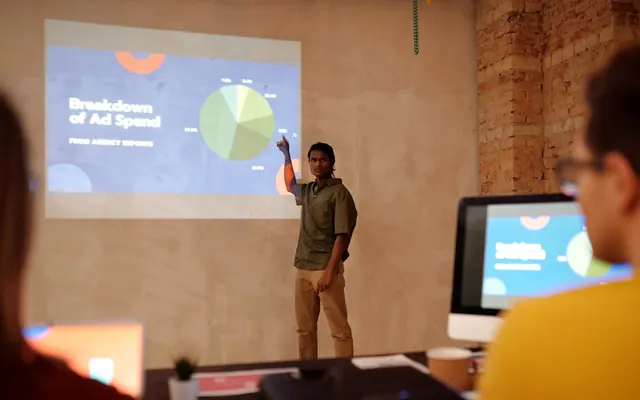
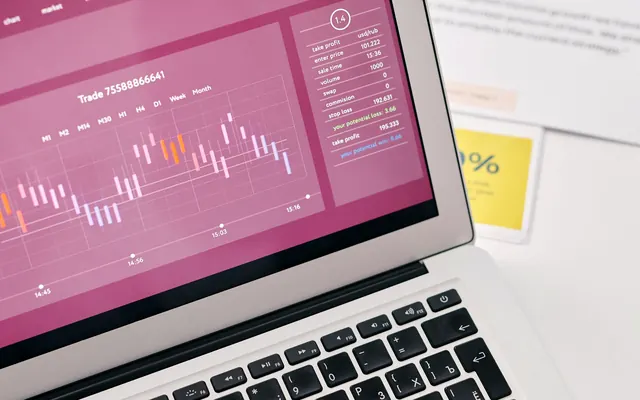
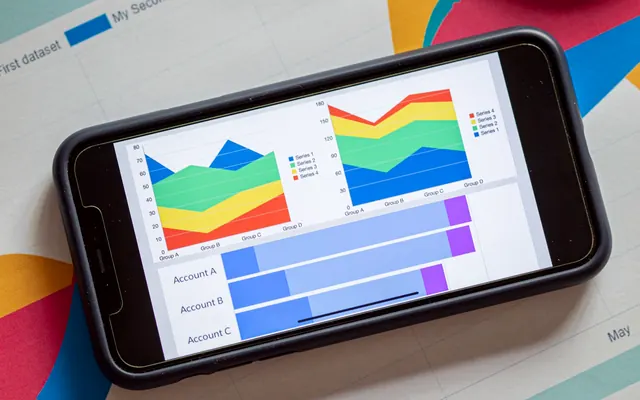
Spend that can be traced to pipeline.
B2B marketing gets judged on cost per lead because nobody wired the CRM up properly. We connect the funnel end to end so the conversation is about pipeline instead of clicks.
- 01
Demand
B2B campaigns aimed at defined accounts and roles
- 02
Capture
Google Ads and Meta Ads with intent-matched landing paths
- 03
Qualify
Automated routing and scoring before a rep is involved
- 04
CRM
Every touch written back, so spend maps to pipeline


The gaps between vendors are where projects fail.
Most of what goes wrong in an ERP or compliance programme happens at a handover — between the people who configure the system and the people who have to close on it. We removed the handover.
The usual arrangement
ERP partner
Owns the configuration, not the numbers
Accounting firm
Owns the numbers, not the system
Tax adviser
Owns one jurisdiction at a time
IT vendor
Owns the network, blind to the application
Automation agency
Owns a script nobody else can maintain
Five contracts, five roadmaps, and a problem that belongs to whoever answers last.
One partner, four disciplines
Technology
We can read the schema, not just the sales deck.
ERP architecture, integration design and infrastructure monitoring sit in the same team, so a systems question gets a systems answer.
Finance
The people configuring it also close the books.
Chart of accounts, tax treatment and close mechanics are designed by accountants, which is why the reports reconcile the first time.
Implementation
Blueprint through hypercare, not a handover.
The same team carries requirements into migration, training and stabilisation — there is no point where accountability transfers.
Automation
Built once the process is worth automating.
Agents and middleware come after the process is defined, so we are not hard-coding a workaround into your operating model.
Engagements, described by their shape.
These are real engagement profiles. Client names and quantified results are withheld until each is cleared for publication — we would rather show you the work than a number you cannot verify.
6 engagements shown
- Manufacturing
- ERP
- Accounting
Multi-entity ERP consolidation
- Challenge
- Separate ledgers per legal entity meant group reporting was assembled in spreadsheets days after each period closed.
- Solution
- A single chart of accounts, blueprinted intercompany rules, and a staged migration that ran both systems in parallel through one full close.
- Outcome
- Group consolidation runs inside the ERP, with every entity closing against one shared calendar.
SAP Business OneData migrationIntercompany reconciliation - Industrial
- Infrastructure
Plant and corporate network visibility
- Challenge
- Operational technology and corporate IT were monitored separately, so faults crossing the boundary were diagnosed by phone.
- Solution
- A unified monitoring estate covering both sides of the OT/IT boundary, with alert routing mapped to the teams that own each segment.
- Outcome
- One topology view spans plant and corporate networks, with a single escalation path per fault class.
SolarWinds NPMSolarWinds SAMOT/IT segmentation - Retail & E-Commerce
- Integration
- Accounting
Storefront-to-ledger synchronisation
- Challenge
- Orders, refunds, marketplace fees and settlements were re-keyed from four channels into the accounting system every week.
- Solution
- Middleware that maps each channel to one order schema, posts settlements net of fees, and holds exceptions in a review queue instead of failing silently.
- Outcome
- Channel activity posts to the ledger automatically, with a reconciliation queue for anything that does not match.
ShopifyAmazonWooCommerceCustom middleware - Professional Services
- Accounting
Offshore accounting pod
- Challenge
- An in-house finance team was absorbed by transaction processing and had no capacity left for analysis.
- Solution
- A dedicated pod took on transaction processing, AP/AR and the monthly close, working inside the existing systems on a published calendar.
- Outcome
- Routine processing moved offshore; the in-house team retained review, approval and analysis.
QuickBooks OnlineAP/AR workflowMonthly close pack - Distribution
- AI
- Integration
Invoice capture with human approval
- Challenge
- Supplier invoices arrived as PDFs and scans, and were typed into the ERP line by line before approval.
- Solution
- An OCR and extraction pipeline that proposes a coded invoice, matches it against the purchase order, and routes anything below a confidence threshold to a person.
- Outcome
- Capture and coding are automated end to end, with human approval retained as the control point.
Invoice OCRThree-way matchingApproval workflow - Cross-border Group
- Tax
- Accounting
Compliance across three jurisdictions
- Challenge
- Entities in Pakistan, the UK and the US were served by three advisers with no shared view of deadlines or positions.
- Solution
- One compliance calendar covering all three regimes, prepared from a common set of books with a documented position behind every filing.
- Outcome
- Filings across three jurisdictions are tracked in a single calendar with one point of accountability.
FBRHMRC MTDUS federal & state






Tell us what you are dealing with.
Five short steps produce a preliminary scope you can review before anyone books time. No obligation, and no sales sequence.
Step 1 of 5Needs
What do you need help with?
Select everything that applies.


Let’s solve the systems behind your business.
Bring us the ERP that never quite went live, the close that takes three weeks, or the filings nobody owns. We will tell you what it actually takes to fix it.
wa95122@gmail.com